



Most people think they need more discipline. They tell themselves to try harder, push longer, and stop getting distracted. But focus usually breaks for a different reason.
Attention gets drained by stress, poor sleep, too many choices, and nonstop digital input. By late afternoon, your brain often has less patience for hard tasks. That doesn’t mean you’re lazy. It means your system is asking too much from willpower.
The better approach is simple: make concentration easier by design. When your space, routine, and daily habits support attention, focus starts to feel less like a fight and more like a default.
Understand why willpower is a weak plan for staying focused
Willpower fades because your brain isn’t built to make endless hard choices all day. Every decision takes a bit of mental energy. Add stress, hunger, poor sleep, and distractions, and the drain gets worse.
Research keeps pointing in the same direction. Decision quality tends to slip later in the day, especially when people face constant input and pressure. So if your focus falls apart at 4 p.m., that isn’t a moral failure. It’s often a setup problem.
Losing focus is often a system problem, not a character flaw.
Your brain gets tired of making choices all day
Small choices pile up fast. Should you answer that text now? Which task comes first? Do you keep this tab open or close it? Each one seems tiny, yet they add friction.
As a result, your brain starts looking for easier rewards. Checking messages feels simpler than writing the report. Rearranging your to-do list feels safer than starting the hard thing.
This is why people often do busy work when they’re mentally tired. They’re not weak. They’re running low on clear decision power.
Stress and digital overload make focus much harder
Stress narrows attention. Meanwhile, notifications, clutter, and noise pull it in ten directions at once. That mix pushes your brain toward quick relief.
For example, a buzzing phone offers a fast hit of novelty. An open inbox invites you to react instead of think. A messy desk gives your eyes more to process than they need.
So when you try to stay focused by force alone, you’re swimming upstream. The better move is to lower the number of things fighting for your attention.
Set up your environment so focus becomes the easy choice
Environment beats motivation more often than people want to admit. If your phone is beside your keyboard, your browser has 17 tabs open, and your desk is full of random stuff, focus has to battle for space.
Change the room, and you change the odds.
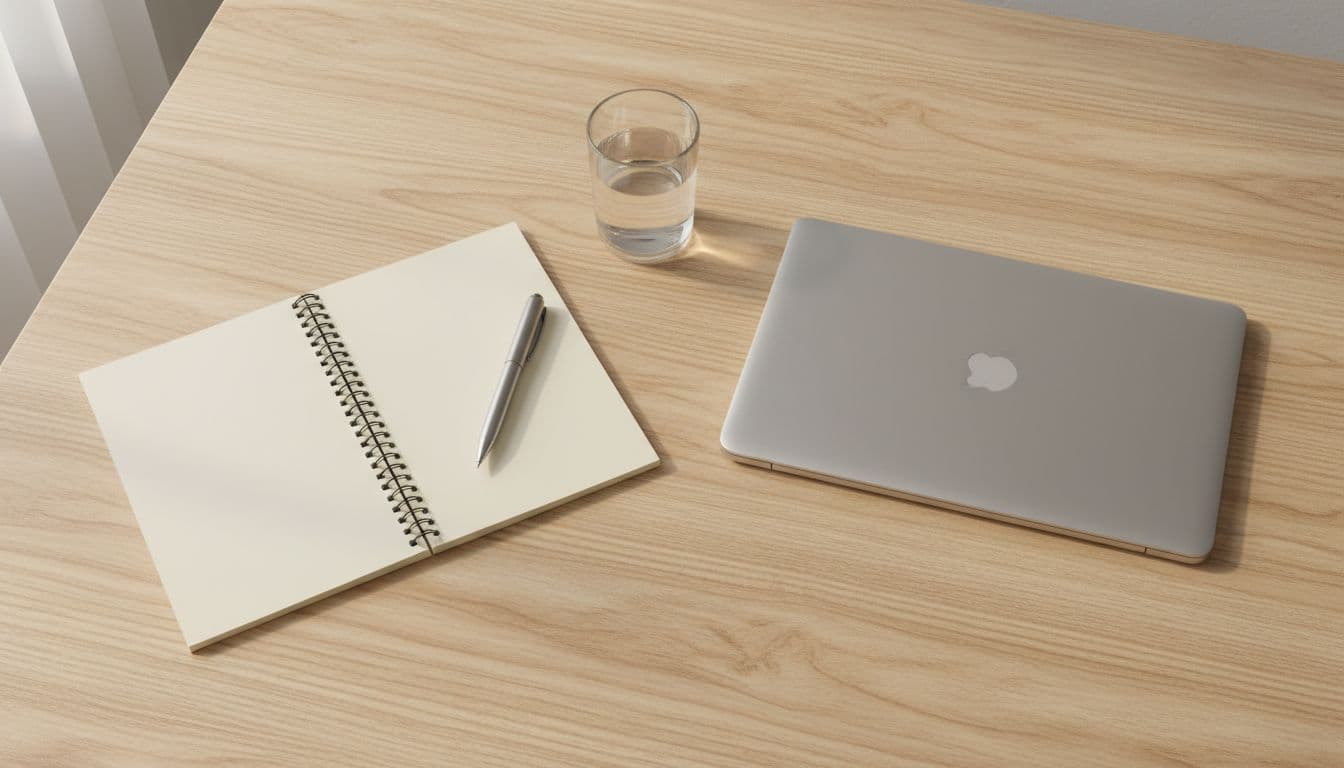
Remove distractions before you start working
The best time to reduce distraction is before you begin. That way, you don’t need to keep resisting it later.
A simple pre-focus setup helps:
- Put your phone in another room, or at least out of reach.
- Turn on Do Not Disturb.
- Close extra tabs and apps.
- Keep water, notes, and tools nearby.
That short reset removes escape hatches. In other words, you make it easier to stay with the task because leaving it takes more effort.
Use simple visual cues that pull you into work
Cues matter because they reduce start-up resistance. A clear desk signals, “It’s time to work.” An open notebook with the next step written down removes the need to think about where to begin.
The same idea works outside desk work. Laid-out workout clothes make exercise easier to start. Headphones on the desk can become a focus trigger. A timer ready to go tells your brain the session has already begun.
These cues seem small, yet they help habits run on autopilot.
Build a focus routine that works even on low motivation days
Routine carries you when motivation is flat. Instead of waiting to feel ready, give yourself a repeatable pattern. That might mean a morning writing block, a post-lunch admin block, and a short planning reset before you finish.

Photo by Vitaly Gariev
Use short focus blocks and breaks to protect your attention
Long sessions aren’t always better. In fact, many people do well with short, clear blocks. You might try 25 minutes on and 5 minutes off. Or use 60 to 90 minutes for deeper work, followed by a real break.
Breaks are not a reward for suffering. They’re part of the system. They help your brain recover before attention starts sliding.
If you often crash halfway through a task, this is usually the fix. Work in rounds, not marathons.
Match your hardest work to your best energy window
Most people have certain hours when thinking feels cleaner. For many, that happens in late morning and again in mid-afternoon. Still, your pattern may differ.
Pay attention for a week. When do you feel sharpest? When do you drag? Put your most demanding task in the strong window. Save lower-energy work, like email or errands, for the softer hours.
That shift removes a lot of needless struggle.
Support your brain with habits that make focus feel natural
Focus is not just a productivity skill. It’s also a body issue. When your basic needs are off, your mind looks for quick relief.
Sleep, movement, and meals affect attention more than people think
Poor sleep makes everything feel harder. So does sitting for hours without moving. Skipping meals can also backfire, because low energy often leads to brain fog and cravings for easy dopamine.
Most adults do better with 7 to 9 hours of sleep, steady meals, hydration, and daily movement. That doesn’t need to mean a full workout. Even a brisk walk can help lower stress and wake up your mind.

Train attention with a short daily reset
You don’t need a long meditation habit to reset attention. Five quiet minutes can help. So can slow breathing, stretching, a short walk, or a brief body scan.
The point is to interrupt mental static. A quick reset helps you stop reacting and start choosing again.
For people focused on health and wellbeing, this is the missing link. Better recovery often leads to better concentration.
Make focus automatic with tiny habits and a clear next step
The easiest way to build focus is to lower the bar for starting. Big plans create pressure. Tiny actions create momentum.
Tie focus habits to routines you already do every day
Link a focus action to something stable. After morning coffee, start a 25-minute work block. After breakfast, write your top three tasks. After a workout, spend five minutes journaling or planning.
This works because the old habit becomes the cue for the new one.
Shrink the first step until it feels too easy to skip
Start with two minutes. Read one page. Write one sentence. Open the file and name the next action.
Also, end each work session by deciding where you’ll restart. That way, tomorrow’s version of you won’t waste energy figuring it out.
Small starts build trust. Then consistency grows from there.
Focus gets easier when the system gets better
Lasting focus doesn’t come from heroic self-control. It comes from four simple levers: environment, routine, energy, and tiny habits. When those work together, concentration feels far more natural. Pick one change today, move your phone, set a work block, or choose one clear focus cue, and let the system do more of the work.


