



Some days begin like a fire alarm. You wake up late, check your phone too soon, skip breakfast, and spend the next ten hours reacting. By dinner, your mind feels like a junk drawer.
A daily planning system should do the opposite. It should take about 10 minutes, lower stress, and make room for work, meals, movement, and rest. In 2026, the best systems are still the simplest ones, time-blocking, top priorities, and small habit cues that fit real life.
If you’re busy and want more calm, better health habits, and less mental clutter, you don’t need a fancy method. You need one you can repeat.
Start with a plan so simple you won’t quit
Most planning systems fail for one reason. They ask tired people to act like full-time project managers. Color codes, five priority levels, endless tags, and packed schedules look nice for two days. Then life barges in.
A simple plan works because it leaves breathing room. You only need four parts: a quick brain dump, your top three tasks, a few time blocks, and a short reset at night. That’s it.
Perfection makes people quit. Simple beats perfect, especially on busy weeks.
Do a 2-minute brain dump to clear the noise
Start by writing down everything in your head. Tasks, errands, worries, reminders, ideas, all of it. Don’t sort it yet. Don’t make it pretty either.
Think of it like clearing a crowded kitchen counter. Once the surface is open, you can finally use it again. Your mind works the same way. When everything stays in your head, each thought taps your shoulder all day.

A two-minute brain dump cuts decision fatigue because you stop trying to remember every loose end. It also helps you spot what matters and what can wait.
Keep it rough. A simple scrap of paper works. So does one note in your phone. The goal is not order yet. The goal is relief.
Pick your top 3 tasks before the day picks for you
After the brain dump, choose three tasks that matter most today. Not twelve. Not a heroic list that belongs to three different people.
When possible, pick one from each lane:
- Work: the task that moves a project, deadline, or key decision
- Personal: the task that keeps life from piling up, like groceries or laundry
- Wellbeing: one action that supports your body, like a walk, meal prep, or early bedtime
This small filter changes the tone of the day. Instead of chasing whatever buzzes loudest, you know what counts.
If everything is a priority, nothing is.
Keep these three realistic. A busy day is not the time to promise a full workout, deep house cleaning, and six hours of focused work. Choose wins you can actually finish.
Build your day around energy, not just the clock
A good plan doesn’t only ask, “What time is it?” It also asks, “What kind of energy do I have?” Your sharpest hour should not go to email if your hardest task needs that focus.
This is where time-blocking helps. You don’t need a rigid minute-by-minute map. You just need a few clear blocks built around the fixed parts of your day, wake-up time, commute, lunch, school pickup, workouts, and bedtime.
When your plan supports meals, movement, and sleep, it stops being just a to-do tool. It becomes a support system.
Use time blocks to protect work, meals, movement, and rest
Time-blocking means giving a job to each part of your day. One block might be focused work. Another might be lunch away from your screen. A third could be a 30-minute walk at 7:00 AM, or meal prep after work.
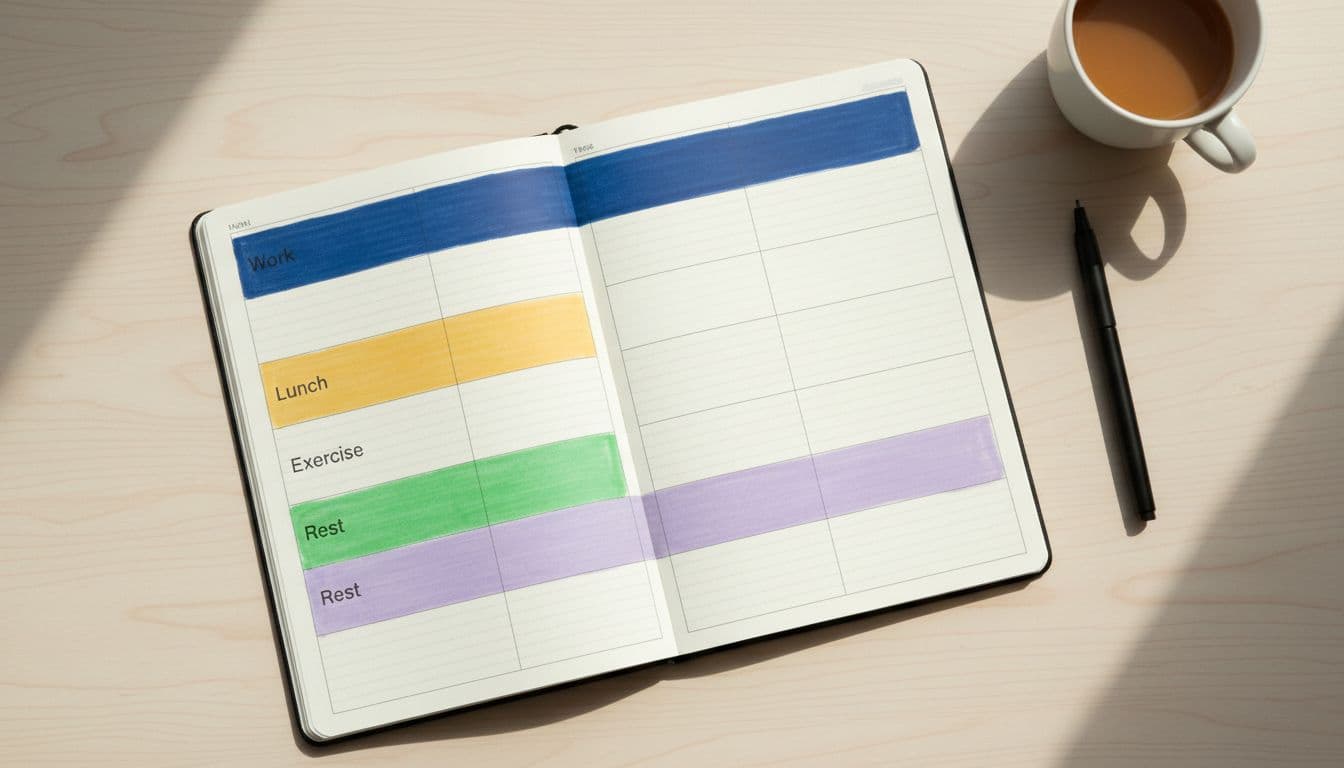
This matters because open space gets stolen. If you don’t block lunch, work fills it. If you don’t block rest, your phone claims the evening.
Many people in 2026 use simple tools that support this style. Popular apps include Morgen, Sunsama, Todoist, Notion, and ClickUp. If you prefer paper, a daily page in a planner like Day Designer can do the same job. The tool matters less than the habit of protecting key blocks.
A strong day often looks plain: deep work, lunch, a short walk, admin tasks, dinner, wind-down, sleep. Plain is good. Plain is repeatable.
Anchor healthy habits to things you already do
Big promises sound exciting. Tiny links change lives.
Habit stacking means attaching a new habit to one you already do without thinking. Stretch after brushing your teeth. Drink water after breakfast. Take a 10-minute walk after lunch. Put your vitamins beside the coffee maker.

These links work because they remove guesswork. You don’t have to find motivation from thin air. The old habit becomes the cue for the new one.
This approach is especially useful for busy people. You may not have an extra hour for self-care. Still, you probably have 30 seconds after brushing your teeth, five minutes after lunch, and a bedtime routine that can hold one better choice.
Small habits look humble. Over time, they build a steadier body and a calmer mind.
Follow the daily planning system in 10 minutes or less
Here is the full system. Use it the night before, the morning of, or split it between both. Keep it light.
- Do a fast brain dump. Write every task, reminder, and loose thought in one place.
- Check your calendar. Mark fixed events first, like meetings, commute time, lunch, workouts, or family plans.
- Choose your top 3. Pick three realistic tasks that matter today.
- Place them into time blocks. Give each top task a home on the calendar.
- Add one health block. This can be a walk, meal prep, stretch break, or screen-free wind-down.
- Leave buffer space. Keep at least one small open pocket for delays, traffic, surprise calls, or low energy.
This quick view helps keep the system practical:
| Time | Focus | Goal |
|---|---|---|
| Evening, 5 minutes | Reset tomorrow | Clear clutter before bed |
| Morning, 5 minutes | Confirm the day | Start with direction |
| Midday, 1 minute | Quick glance | Adjust without panic |
The takeaway is simple: you don’t need a long planning session. You need a short one that you actually do.
The 5-minute evening reset that makes mornings easier
Evening planning feels small, but it changes the next day fast. Instead of waking up to a blank page and a racing mind, you wake up with direction.
Use five minutes to check tomorrow’s calendar, move unfinished tasks, and set your top three. If it helps, choose your clothes, pack lunch, or decide breakfast too. These tiny choices remove friction from the morning.
This reset also keeps unfinished tasks from becoming guilt fog. You are not failing when something moves to tomorrow. You are sorting reality.
A calm morning often starts the night before.
The 5-minute morning plan that keeps the day on track
In the morning, review what you set. Then make one more pass based on how the day actually looks.
Confirm your top three, place them into time blocks, and leave a little buffer space. If your afternoon is stacked with meetings, shift your hardest task earlier. If your sleep was poor, shrink the plan instead of pretending your energy is fine.
Some planners, including Panda Planner Pro, add prompts like gratitude or intention-setting. For some people, that creates a calmer start. For others, it feels like extra homework. Use it only if it helps.
The best morning plan is clear, honest, and flexible.
Make the system stick, even when life gets messy
No plan survives every school email, traffic jam, or rough night of sleep. That’s normal. A good system bends without breaking.
The real goal is not a perfect streak. The goal is returning quickly.
Miss a day, then start again the next day.
That one rule saves people from the all-or-nothing trap.
Avoid the planning mistakes that waste time and energy
The most common mistake is making a giant to-do list and calling it a plan. A list is storage. A plan is a decision.
Another trap is scheduling every minute. That looks tidy, but real life needs space. Skip that. A few key blocks work better than a packed calendar with no room to breathe.
Breaks matter too. If you block work but not lunch, water, movement, or rest, the plan quietly works against your health. Busy people often pay for this later with brain fog, overeating, or poor sleep.
Finally, don’t scatter your life across too many tools. One planner or one app is enough for most people. You might like paper, or you might prefer Todoist, Notion, or Morgen. TickTick can help if habit tracking matters to you. What matters most is keeping tasks, time, and daily priorities in one main home.
Use a short weekly check-in to reset without guilt
Once a week, spend 10 to 15 minutes reviewing the last few days. Keep it simple. Look at what worked, what got skipped, and what needs to move into the next week.
Don’t only measure output. Also check your energy, workouts, meals, sleep, and stress. A week with fewer tasks but better rest may still be a strong week.
This is also the time to sort tasks by importance before the week starts. That way, Monday doesn’t arrive like a wave hitting the shore.
A short weekly check-in helps you adjust with honesty instead of shame. You stop asking, “Why can’t I keep up?” and start asking, “What kind of week am I walking into?”
That question leads to better plans.
A busy day can feel like a room with too many voices. A simple plan turns down the noise. Start with a brain dump, choose your top three, and block time for work, meals, movement, and rest. That’s enough to begin.
You don’t need a complex system. You need a repeatable one. When you create a little breathing room, you think more clearly, move more often, and feel more like yourself.


