



One missed email at 4:47 p.m., and suddenly your brain is writing a disaster movie. A short Slack reply feels cold, a typo in a deck feels career-ending, and one awkward meeting starts to look like proof that everything is slipping.
That jump is catastrophizing, plain and simple. It means turning a small problem into a giant future collapse. During packed, stressful weeks, that habit gets louder. This isn’t about pretending problems aren’t real. It’s about seeing them at the right size so you can think clearly and respond well.
Why stressful weeks make your brain jump straight to disaster
Stress changes the way your mind reads signals. When your body feels pressed for time, money, sleep, or control, it starts scanning for threat. Then a normal hiccup can feel like a siren.
This is common in founder life, management, and any role with too many moving parts. If you’re juggling hiring, team tension, customer pressure, and a calendar that looks like spilled ink, your brain has less room for patience. As a result, it starts guessing fast, and it often guesses dark.
Recent research helps explain why. Under stress, the brain gets worse at predicting what will happen next. When uncertainty rises, worst-case thinking can feel oddly useful because it creates the illusion of control. The problem is that the relief is short-lived. The habit gets stronger, and your stress gets fed.
Catastrophizing is a stress habit, not a crystal ball
Catastrophizing feels like insight. It isn’t. It’s a stress habit that treats discomfort like danger.
Say you leave a meeting feeling off. Maybe your idea landed flat, or your boss seemed distracted. A calm mind might think, “That was awkward.” A stressed mind builds a tower: “They’ve lost trust. The client will notice. My work is slipping. I’m going to fail.”
That story can arrive in seconds. Yet none of it is fact. It’s a chain of guesses dressed up like certainty.
When your mind predicts disaster, it is not reporting the future. It is reacting to stress in the present.
That shift matters. Once you see catastrophizing as a habit, you stop treating every alarm as truth.
Small triggers hit harder when your mental load is already full
Small problems feel bigger when your system is already crowded. Poor sleep shortens your fuse. Too much caffeine can make your body feel jumpy, which your mind then reads as danger. Skipped meals, back-to-back meetings, family stress, and inbox overload all drain emotional bandwidth.
Then something minor happens. A teammate sends a brief message. A customer asks a pointed question. A bug appears late on Friday. Because your mental load is already maxed out, that small trigger lands like a brick instead of a pebble.
This is why stressful weeks need more kindness and more realism, not harsher self-talk. You’re not weak. You’re overloaded.
Catch the spiral early, before one thought turns into ten
You don’t stop catastrophizing by arguing with thought number ten. You stop it by catching thought number one, or at least thought number three, before the whole train picks up speed.
Awareness comes first. Fixing comes second. That order matters because a stressed mind doesn’t reason well while it’s still sprinting.
Name the thought so it stops running the room
Putting a name on the thought creates a little distance. Research suggests that labeling an emotion or thought can help the thinking part of your brain regain some control over the alarm system.
Keep the label plain. You don’t need therapy-speak. Try lines like, “I’m doing the worst-case thing again,” or, “This is a stress story, not a fact.” If you can, write down the trigger beside it. “Trigger: terse email. Thought: I’m about to lose trust.”
That tiny act separates event from story. The email is real. The disaster plot is added later.
If writing helps, keep one note in your phone. Make it boring. Boring is good here. The goal is not perfect insight. The goal is to stop the thought from blending into reality.
Look for body clues that your mind is speeding up
Your body often knows first. Catastrophizing has a physical signature.

Maybe your chest gets tight. Your breathing turns shallow. Your jaw locks. You start re-reading the same message, doom scrolling, or trying to solve a problem at the wrong time of night. Some people feel stomach knots. Others feel a burst of urgent energy that looks productive but isn’t.
Those signs matter because they show the spiral early. Before your mind says, “Everything is falling apart,” your body often says, “I feel under threat.”
Start there. Notice the clench, the racing, the screen-staring. Then say, “My system is activated.” That is often more useful than saying, “I must fix my whole life before lunch.”
Shrink the problem back to its real size
Once you’ve caught the spiral, the next step is not fake optimism. You don’t need to say, “Everything is fine,” when it isn’t. You need a fair view.
That is the heart of good reframing. It brings the problem back to its real shape. Not tiny, not huge, just accurate.
Ask for evidence, not just fear
Fear is loud, but it is a poor fact-checker. When you’re stressed, your brain is bad at guessing odds. That’s why a few grounding questions can help so much.

Use questions like these:
- What facts do I have? Separate what happened from what you fear it means.
- What story am I adding? Notice the extra meaning your mind is piling on.
- What is the most likely outcome? Not the best case or worst case, the likely case.
- If this goes badly, what would I do next? A plan lowers panic.
- Will this matter in a week or a month? Time often shrinks false urgency.
Imagine you sent an update with one wrong number. The fear says, “I’ve damaged my credibility.” The facts say, “I sent one wrong number, I caught it, and I can correct it.” That’s a problem, yes. It is not the end of trust, your role, or your future.
Swap one giant fear for one next step
Panic loves broad statements. “This project is doomed.” “The team is losing faith.” “I’m blowing it.” Those thoughts are huge, slippery, and hard to act on.
So shrink them into one next move. Clarify the email. Fix one bug. Ask one person what they heard in the meeting. Reschedule one call so you can think straight. Action cuts through fog because it gives your brain something real to do.
This matters more than people think. A stressed brain wants total certainty before it moves. Real life doesn’t work that way. Small movement often creates the calm that waiting cannot.
Use simple reset tools when your mind won’t let go
Some days, the thought keeps circling even after you’ve named it. That’s normal. A busy week can leave your system humming long after the trigger is gone.
When that happens, use tools that fit real life. Not a perfect retreat. Not a two-hour routine. Just something short enough to use between meetings.
Try the 10-minute worry window
Worry postponement sounds almost too simple, but it works because it puts a fence around mental spinning. Pick a set time later in the day, maybe 4:30 p.m., and give the worry ten minutes there.
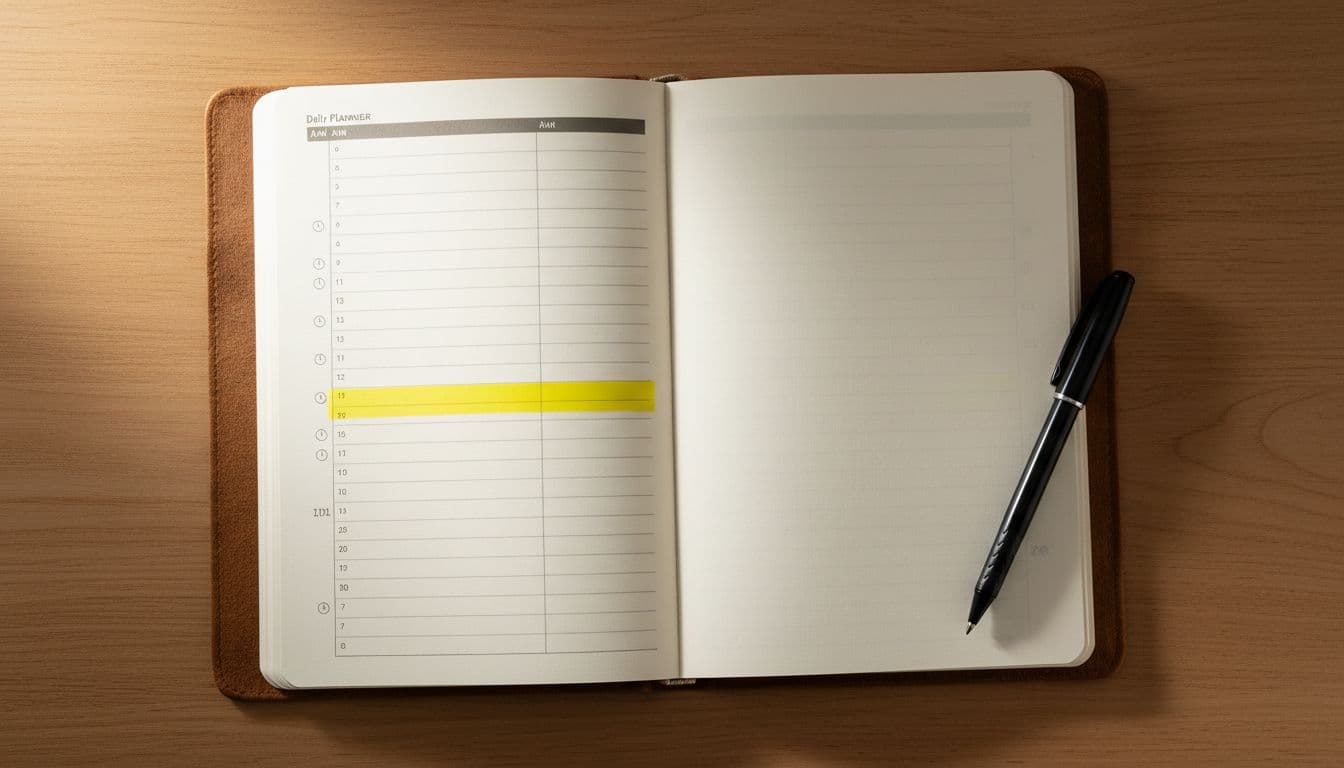
Until then, tell yourself, “Not now. I have a place for this later.” When the window comes, write three things: the worry, the worst case, and your plan if it happened. Many fears lose force when they have to sit quietly in a notebook instead of racing loose in your head all day.
This also teaches your brain that not every alarm needs instant attention. That lesson is gold during packed weeks.
Calm your body first, then talk back to the thought
A flooded body makes clear thinking hard. So start there.
Try one minute of longer exhales. Inhale for three, then exhale for six. Or stand up and walk for five minutes without your phone. Even stepping away from screens and looking out a window can lower the sense of threat.
Then come back to the thought. Not before.
This order works because your body and mind are on the same loop. If your chest is tight and your jaw is clenched, your brain will keep searching for danger. A calmer body gives your thoughts less fire to burn with.
Build a week that gives catastrophizing less fuel
You won’t remove stress from work. You can lower the fuel that helps stress grow teeth.
Think of this as basic upkeep. Not self-improvement theater. Not a perfect morning routine. Just the small things that keep your brain from turning every spark into a five-alarm blaze.
Protect the basics, because tired brains tell scarier stories
Sleep is not a moral issue. It is an accuracy issue. When you’re tired, you read signals worse. Food matters for the same reason. A skipped lunch can look like “I’m fine,” right up until a normal hiccup feels like disaster at 3 p.m.
Movement helps too, even when it’s brief. A ten-minute walk can break the body’s stress loop and widen your view. Breaks do the same job. Without them, your brain keeps grinding, and everything starts to feel sharp-edged.
If your week is heavy, lower the bar and protect the basics anyway. Eat something with protein. Go to bed a bit earlier. Step outside once. Those actions sound small because they are small. That is why they work.
Keep a short proof list of what is still working
The stressed brain has a threat bias. It remembers the Slack message that stung and forgets the project that moved, the customer who stayed, or the problem you already solved.
A short proof list helps balance that. At the end of the day, write down three things that went right, moved forward, or stayed steady. Keep it concrete. “Closed the loop on the client note.” “Had a better second draft.” “Team handled the issue faster than last time.”
This is not forced positivity. It is a fairness practice. You are giving your mind evidence that the whole house is not on fire.
Stressful weeks will still come. Missed emails, tense messages, and small mistakes are part of working with people and building anything hard. The skill is not avoiding every spark. The skill is learning to pause, label the thought, test it, and take one next step.
When you do that, catastrophizing starts to lose its grip. Small problems stay small more often, because your mind stops pouring fuel on them.
The next time your brain writes a disaster movie over one rough moment, cut the script short. Then deal with the real scene in front of you.


