


You get home, drop your keys in the bowl by the door, and wait for that exhale to come. It doesn’t. Your shoes are off, but your mind is still sitting at the desk. The meeting replay starts again. The unread message nags. Even dinner feels like a task you have to push through.
That kind of work stress is common now, especially when home and work keep sharing the same screens, rooms, and hours. In remote and hybrid routines, the day doesn’t always end when the laptop closes. Sometimes it just changes location.
The good news is that spillover stress often leaves clues. You may notice them in your sleep, your patience, your body, or the way you move through the evening. Spotting those signs early matters, because stress that tags along day after day can slowly slide into burnout.
Why work stress is harder to leave behind now
Work used to have clearer walls. Now, for many people, those walls are thin or gone. Recent 2025 and 2026 workplace reports show how common this has become. About 77% of employees say they felt work stress in the past month, and 65% say it harms home life. At the same time, 54% of workers report stress tied to job insecurity, including worry about AI and automation.
Here is the quick picture.
| What workers report | Recent data |
|---|---|
| Work stress in the past month | 77% |
| Stress harming home life | 65% |
| Burnout in the past year | 66% |
The takeaway is simple: if work stress follows you into your living room, you’re not failing at balance. You’re reacting to a very real pattern in modern work.
Home and work now share the same space in many people’s lives
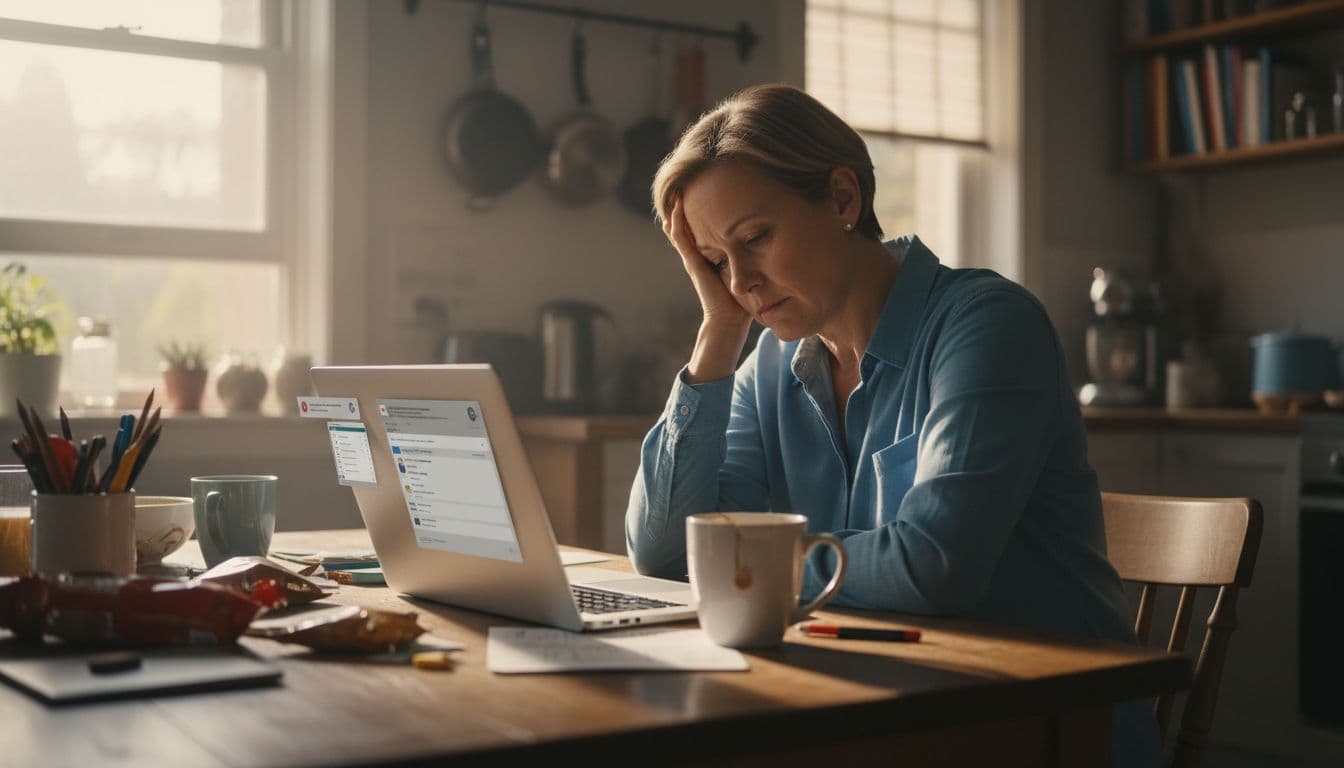
For many adults, the kitchen table became a desk, the guest room became an office, and the phone became a pocket-sized workplace. Because of that, home doesn’t always feel like a reset. It can feel like a second shift.
When your brain starts linking your couch, your hallway, or your dining chair with deadlines, it gets harder to relax there. Even seeing your laptop bag can tighten your chest. Over time, your space stops sending the message, “you’re safe to rest now.”
Constant connection keeps the body in stress mode
A late email seems small. A quick check of the team chat feels harmless. Still, those little touches can keep your nervous system switched on.
Your body doesn’t care that you’re technically off the clock. If pings keep coming, or if you keep checking for them, stress hormones can stay high into the evening. That’s why you may feel wired and tired at the same time, like an engine still idling in the driveway.
When work can reach you at any hour, your body may stop believing the day is over.
The 7 signs work stress is following you home
These signs don’t always arrive loudly. Often, they show up as little changes that build over time. A shorter fuse. A heavier body. A mind that won’t settle.
You’re always tired, even after sleep or a quiet weekend
This kind of tiredness feels deeper than “I stayed up too late.” It’s the kind that sits in your bones. You wake up feeling like the day has already taken something from you.
Stress drains energy even when you got enough hours in bed. Your muscles stay tense. Your mind keeps running in the background. As a result, rest doesn’t land the way it should.
Maybe you sleep in on Saturday, yet by mid-morning you already feel worn thin. Or you finish a low-key weekend and still dread Monday with the weight of someone who never really recovered.

Your sleep is off because your mind is still at work
Sometimes stress shows up the moment the house goes quiet. You lie down, turn off the light, and suddenly your brain starts opening tabs. That awkward meeting. Tomorrow’s deadline. The email you forgot to send.
You might struggle to fall asleep, wake at 3 a.m., or have stress dreams that leave you feeling half-awake all night. Some people also reach for their phone “just to check one thing,” which pulls them right back into work mode.
The body may be in bed, but the brain still feels on call. That’s why sleep becomes shallow, broken, or hard to trust.
Small things at home make you snap faster than usual
Stress often steals patience before it steals anything else. A dish left in the sink suddenly feels huge. Normal household noise grates on you. A simple question from your partner or child lands like one more demand.
That doesn’t mean you’re a bad person. It often means your system is overloaded. When your tank is close to empty, even small bumps in the road feel sharp.
This sign can be easy to miss because it hides inside daily life. You may think, “I’m just tired,” or “everyone’s annoying today.” Yet if irritability keeps showing up at home, work stress may be the spark.
Your body hurts, even when you can’t point to a clear reason
Stress doesn’t stay in the mind. It likes to move into the neck, jaw, shoulders, gut, and head. Sometimes the body speaks first.
You might notice headaches at the end of the day, tight shoulders during dinner, jaw clenching while watching TV, or stomach trouble that seems to come from nowhere. In addition, poor work-from-home setups and long screen time can pile on more pain.
Think of stress like someone turning the volume up on muscle tension. At first, it’s background noise. After a while, it becomes hard to ignore.
You pull away from family, friends, and the things you enjoy
At first, it can look like needing a little space. You cancel one plan. You skip a workout. You sit with people you love, but feel far away from them.
Over time, that distance can grow. Stress can make conversation feel like effort. Hobbies start to seem pointless. Even things that used to refill you, reading, walking, cooking, laughing with friends, may feel oddly flat.
This is one of the quieter signs, because withdrawal can masquerade as being “busy” or “just needing downtime.” Still, if you keep shrinking your life to work and recovery, stress may be taking up too much room.
Your mood keeps shifting, or you feel low more often
Some evenings, stress looks like anxiety. On other nights, it looks like sadness, numbness, or a heavy mood you can’t quite name. You may feel up and down for no clear reason.
Work stress can tint the whole evening gray. Home stops feeling restful. The hours after work become something to get through, not enjoy.
That emotional swing can also feel confusing. Maybe nothing dramatic happened, yet your mood drops the second you log off. That’s a clue worth taking seriously, especially if it keeps happening week after week.
You can’t focus on simple things once you’re home
You stand in the kitchen and forget why you walked in. You read the same bill twice and still can’t process it. Someone tells you a story, and your mind slips away mid-sentence.
This kind of brain fog is common when work has crowded every corner of your attention. After a day of notifications, decisions, and mental switching, your mind may feel stuffed past capacity.
Then simple tasks get weirdly hard. Cooking dinner feels like solving a puzzle. Choosing what to wear tomorrow takes too long. Even a normal conversation can feel slippery. That’s not laziness. It’s overload.
What to do if these signs sound familiar
The goal isn’t to build a perfect routine or become calm on command. The goal is to reduce spillover so your home can feel like home again.
Small actions work better than grand plans, because stressed people rarely need one more big thing to manage.
Build a small end-of-day ritual that tells your brain work is done
Your brain likes cues. If every workday ends differently, it may not get the signal to stand down. A short, repeatable ritual helps draw that line.
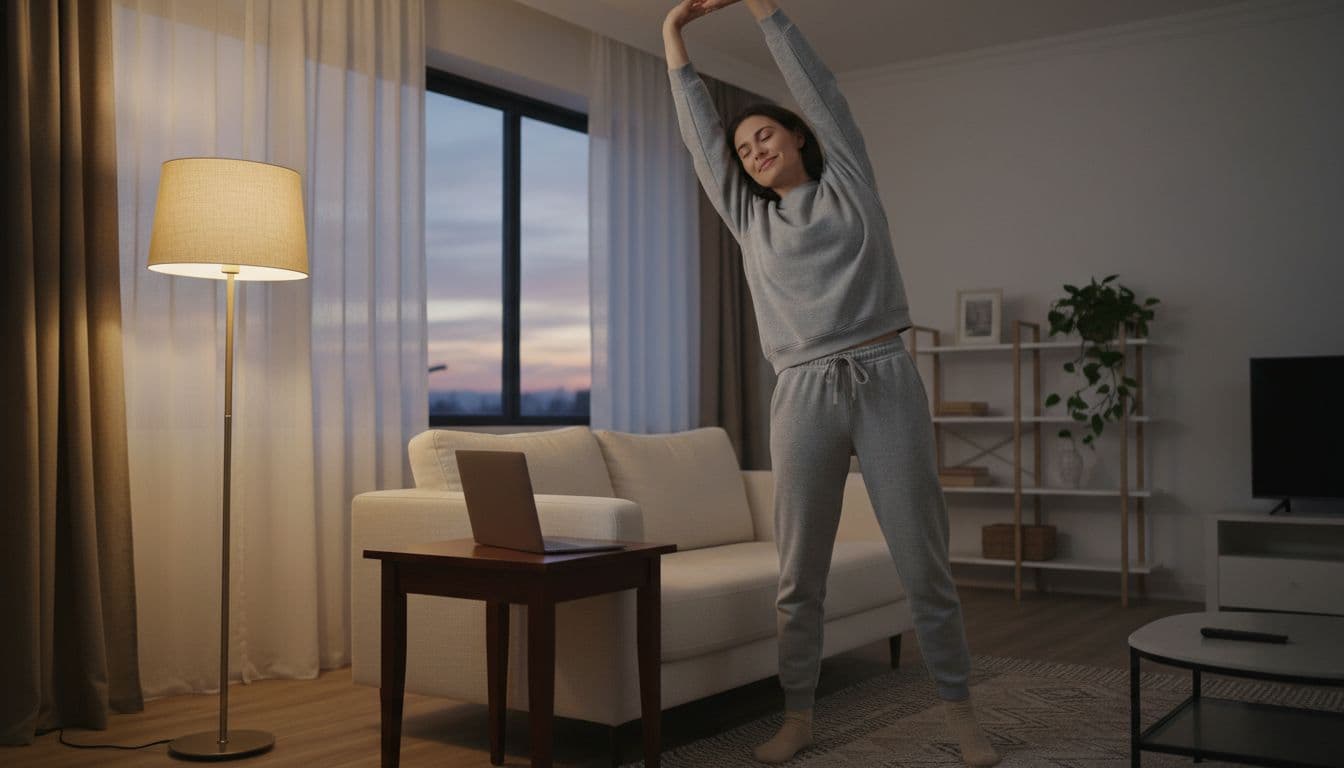
That ritual can be very simple. Shut the laptop and put it out of sight. Change clothes. Wash your face. Take a 10-minute walk. Stretch by the couch. Write tomorrow’s top three tasks on paper so they stop circling in your head.
The key is repetition, not length. When you do the same few actions each evening, your body starts to learn, “we’re done now.” That’s powerful, especially in homes where work and life share the same space.
Know when stress needs more support
Sometimes better boundaries help a lot. Other times, stress has already dug in deeper. If it’s hurting your sleep, mood, health, or relationships, reach out.
Talking with a doctor, therapist, or mental health professional can help you sort out what’s stress, what’s burnout, and what support fits your life. If that feels like a big step, start smaller. Tell someone you trust what you’ve noticed. Say it out loud. That alone can break some of the pressure.
You don’t need to wait until things get unbearable. Support is not a last resort. It’s part of caring for yourself while life is still moving.
Work stress doesn’t always stay at work, especially now that so many people carry the office in their pocket. Still, noticing these signs early can help you protect your energy, your health, and your relationships. Burnout doesn’t arrive all at once, and relief doesn’t have to either. A few small changes, made on purpose, can help your evenings feel lighter and your home feel like yours again.


