



By the end of the day, many adults move on autopilot. Dinner gets cleaned up, one more email sneaks in, the phone glows in the dark, and somehow bedtime arrives without any real pause. Morning then feels like waking up with sandbags tied to your ankles.
That last stretch of the day matters more than most people think. Better evening habits can shape sleep, stress, energy, and next-day focus. The CDC still recommends at least seven hours of sleep for adults, yet recent data shows about 30% to 46% of U.S. adults reported getting less than seven hours a night, and 30% to 52% regularly don’t get enough sleep.
Busy schedules are part of the problem. So are stress, bright screens, late caffeine, and the habit of treating bedtime like a finish line instead of a landing. This guide keeps things practical. No perfect routine, no two-hour self-care ritual, just habits that work in real homes on real weeknights.
Start with a simple evening routine you can actually keep
A good evening routine should feel like a soft light, not a second job. If it asks too much from you, you won’t keep it when work runs late, the kids need something, or your workout ends at 8:30.
The goal is repeatable, not impressive. A short routine done most nights beats a long one you only manage on Sundays. Think of it like brushing your teeth. It works because it’s built into life, not because it feels exciting.
The best evening routine is the one you can still do on a tired Tuesday.
Pick a set bedtime and protect it most nights
Your body likes rhythm. When you go to bed around the same time, your internal clock starts to expect sleep. That means you often feel sleepy faster and wake more steadily.
Consistency matters more than having a long list of habits. A regular bedtime and wake time help set your circadian rhythm, which supports better sleep quality and better energy the next day. For busy adults, that can be the biggest win.
This doesn’t mean every night has to match perfectly. Life won’t allow that. Still, if your bedtime swings from 10:15 one night to 1:00 the next, your body never gets a clear signal. Protect a target bedtime on most nights, and keep your wake time fairly steady too.
Create a 30-minute wind-down instead of doing chores until bed
A lot of adults work right up to sleep. They answer messages, fold laundry, wipe counters, and then expect their brain to power down on command. It rarely works that way.
A 30-minute wind-down gives the day a clean edge. You might wash your face, set out tomorrow’s clothes, dim the lights, fill a water glass, and read a few pages. None of that is dramatic. That’s the point.

Your brain needs a cue that the day is ending. Low light, lighter tasks, and calm repetition send that message. Even a short buffer helps because it shifts you out of “go mode” before your head hits the pillow.
Cut the habits that quietly steal your sleep
Some evening habits don’t look harmful. They feel normal, even harmless. Yet they keep the body alert, the mind busy, and sleep lighter than it should be.
This isn’t about guilt. It’s about noticing the small leaks in the bucket. Fix enough of them, and the whole night improves.
Put screens away before bed, even if it’s just for one hour
Phones are easy company at night. They’re also noisy, even when the room is silent. Blue light can suppress melatonin, the hormone that helps you feel sleepy, and screen content keeps the mind switched on. Research also suggests the mental stimulation matters as much as the light itself.
Recent findings show over half of adults still use phones within an hour of bedtime. Many also scroll in bed. That habit stretches the day longer, pushes sleep later, and fills the mind with news, work, or social comparison right when the brain should be quieting down.
Try an honest one-hour screen cutoff before bed. If that feels too big, start with 30 minutes. Then swap in something gentle, like reading, light stretching, a shower, or calm audio with the screen out of reach. Even charging your phone across the room can change the whole feel of the night.
Watch late caffeine, alcohol, and heavy meals
Late coffee can linger long after the mug is empty. Studies still point to caffeine as a common sleep blocker because it reduces sleepiness for hours. A simple fix is to set a caffeine cutoff, often around noon or early afternoon, based on your own sensitivity.
Alcohol is trickier because it can make you feel sleepy at first. Yet later in the night, it often breaks up sleep and cuts into deeper rest. You may fall asleep fast but wake feeling oddly flat, dry, or unrested.
Heavy meals close to bed can create their own mess, especially reflux, indigestion, or a warm, restless feeling. If you need something at night, keep it light. A small snack is easier on the body than a second dinner at 9:30.
Use calming habits that help your body slow down
Once you cut some of the sleep thieves, it helps to add one or two habits that lower the volume in your body. Think less “wellness routine,” more “quiet hand on the shoulder.”
The best calming habit is rarely the fanciest. It’s the one you’ll repeat when your energy is low and your mind is crowded.
Try a quick brain dump to stop the bedtime thought spiral
You finally get still, and then your brain throws a meeting. Tomorrow’s tasks, a bill you forgot, a text you need to send, something awkward you said three years ago, it all shows up at once.
A brain dump is a simple way to clear that mental traffic. For five to 15 minutes, write down what’s on your mind. List tasks, worries, reminders, and loose thoughts. The page doesn’t need to look pretty. It just needs to hold what your brain is gripping.
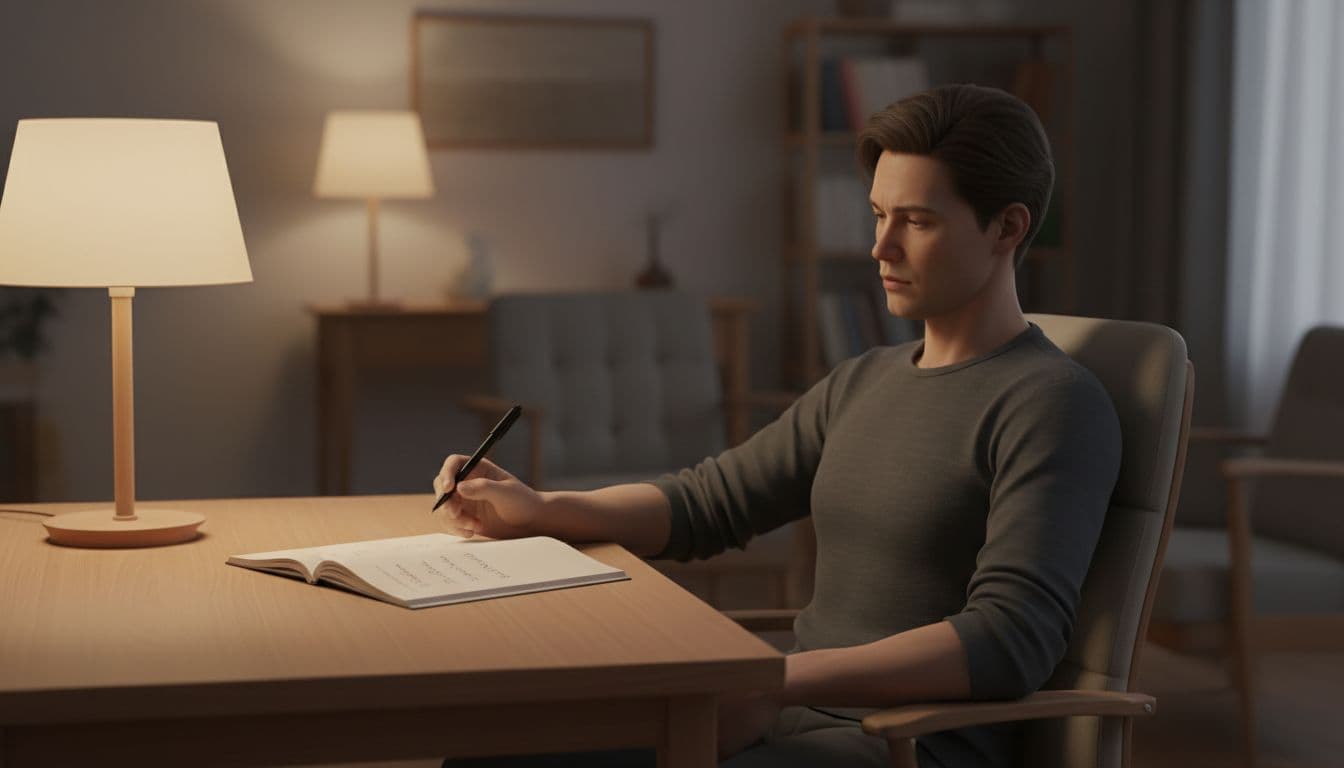
Research links this kind of journaling with faster sleep onset and less bedtime stress. In other words, your mind settles because it no longer has to keep every thought in the air. Paper becomes a shelf.
Choose one quiet reset, stretch, breathing, prayer, or meditation
Calming doesn’t have to mean silent lotus poses and expensive apps. It can be a few neck stretches beside the bed, slow breathing for three minutes, a short prayer, or a simple guided meditation.
Pick one practice that fits your life and beliefs. If you hate meditation, skip it. If prayer centers you, use that. If your body carries the day in your shoulders and hips, gentle stretching may work best.
Relaxation habits are among the most helpful sleep-support tools people try because they lower stress at the right time. The key is not variety. It’s repetition. One quiet reset, done often, teaches your body what night feels like.
Set up your bedroom so sleep comes easier
The room itself can either support rest or fight against it. You don’t need a luxury makeover. Most people sleep better with a few simple shifts.
Your bedroom should feel like a landing place. If it feels like a train station, your mind stays on alert.
Keep the room dark, quiet, cool, and free from work
Sleep usually comes easier in a dark, quiet, cool room. Research-backed ranges often place a good sleep temperature around 60 to 67°F. Blackout curtains, a fan, earplugs, or white noise can help more than many people expect.
Just as important, keep work out of bed. When you answer emails, scroll social feeds, or watch TV under the covers, your brain starts to pair that space with alertness. Over time, the bed stops feeling like a cue for sleep.
That link matters. The more your bed is only for sleep and intimacy, the easier it becomes for your body to shift into rest there.
Make your bedroom feel like a landing place, not a second office
Picture two rooms. One has a bright overhead light, a pile of clothes, a laptop half-open, and a phone buzzing on the nightstand. The other has dim light, clean surfaces, soft bedding, and no blinking screens. Both are bedrooms, but only one invites your nervous system to unclench.

Easy wins count here. Clear the nightstand. Charge the phone across the room. Turn on lamps instead of overhead lights an hour before bed. Fold the blanket. Small touches can make the room feel less like a storage bin for the day and more like a place where the day can end.
Build an evening routine that survives real life
The perfect routine falls apart the first time life gets messy. A useful routine bends without breaking.
That’s why busy adults do better with flexible structure. You need a version for normal nights and one for the nights that come off the rails.
Keep a short version for busy nights and a fuller version for slower ones
A minimum routine protects you from the all-or-nothing trap. On rough nights, five to ten minutes may be enough. Wash up, dim the lights, plug in the phone across the room, write tomorrow’s top three tasks, and get in bed.
On slower nights, you can do more. Add stretching, reading, longer journaling, or a warm shower. The point is to keep the core pattern alive even when time is tight.
This matters for parents, shift workers, frequent travelers, and anyone whose evenings don’t follow a clean script. A short version keeps the habit going, and that consistency carries more weight than occasional perfection.
Start with one habit this week, then stack the next one later
You don’t need a new life by Monday. Start with the habit that solves your biggest evening problem. If you scroll too late, set a phone cutoff. If stress keeps you awake, try a brain dump. If bedtime drifts, pick a target time and guard it.
Let that one habit settle in first. Then stack the next one later. Change works better when it grows roots before it grows branches.
Most of all, keep the tone kind. Evening habits should help you exhale, not give you one more standard to fail. A calmer night often begins with one simple choice repeated often enough that it starts to feel like home.
Better evenings aren’t about doing more. They’re about ending the day on purpose. A steady bedtime, less screen time, one calming ritual, and a sleep-friendly bedroom can change how you rest and how you feel the next morning. Start with one small shift tonight, because a calmer evening often leads to steadier energy, clearer focus, and a morning that feels less like recovery and more like a fresh start.


