


If you’ve ever started a healthy plan and quit two weeks later, you’re not lazy. The plan was probably too strict, too long, or too hard to fit into real life.
A healthy routine should work on busy Tuesdays, low-energy Fridays, and messy weekends. It shouldn’t depend on perfect motivation. Recent research and expert advice in 2026 keep pointing to the same idea, small repeatable habits beat all-or-nothing change.
The goal isn’t to build the ideal routine. It’s to build one you can keep doing, even when life feels full.
Start with the few healthy habits that matter most
Most routines fail because they try to fix everything at once. Better food, more workouts, less stress, better sleep, more water, less screen time, all starting Monday. That’s not a routine, it’s a pile of pressure.
A better approach is to pick a few habits with the biggest payoff for health and energy. Think of it like packing a small bag for a trip. You bring what you’ll actually use.
Pick one habit each for movement, food, and sleep
Start with one simple action in each area.
For movement, that might be a 10-minute walk after lunch or dinner. Walking after meals can help support healthy blood sugar, and it feels easier than forcing a hard workout.
For food, keep it basic. Drink more water, eat one balanced meal a day, or add fruit to breakfast. You don’t need a full meal overhaul to feel better.
For sleep, try going to bed at roughly the same time most nights. A regular sleep schedule supports mood, focus, and steady energy. That matters more than one perfect night of sleep.
A simple routine works because you can repeat it, not because it looks impressive.
Make your routine fit your real life, not your ideal life
Your work hours matter. Family duties matter. Stress, budget, and energy all matter too.
So build around your real day. If mornings are chaos, don’t base your whole routine on a 5 a.m. start. If evenings are packed, don’t promise yourself an hour at the gym after work.
Choose habits you can do on weekdays, weekends, and low-motivation days. A routine should feel realistic enough to survive normal life. That’s what makes it strong.
Build a routine that is so easy you can repeat it
Motivation is helpful, but it’s unreliable. Some days you feel ready. Other days, even filling a water bottle feels like effort.
That’s why healthy routines stick when they are easy to start. Research keeps showing that consistency matters more than intensity, especially in the early stage. Small actions lower friction, and low friction wins.
Start small enough to win every day
Tiny habits sound almost too simple, but that’s the point.
Stretch for two minutes. Walk around the block. Fill your water bottle every morning. Eat one decent lunch instead of chasing a perfect diet.
These actions may feel small, yet they build trust. When you do them often, your brain stops treating them like big tasks. Over time, the small version often grows on its own.
A daily 10-minute walk done for months will help more than random bursts of effort.
Use habit stacking to make new habits feel natural
Habit stacking means attaching a new habit to something you already do.
After brushing your teeth, drink a glass of water. After lunch, take a short walk. After dinner cleanup, prep breakfast for tomorrow.
This works because the old habit becomes the cue for the new one. You don’t have to remember from scratch every time. The routine starts to feel automatic, like hanging your keys in the same spot each day.
Set up your environment so the healthy choice is easier
Willpower is overrated when your environment keeps pulling you the other way.
Put water where you can see it. Keep fruit on the counter. Prep easy snacks before the week gets busy. Place your walking shoes by the door. Charge your phone outside the bedroom if late-night scrolling hurts your sleep.
These changes seem small, yet they remove decision fatigue. When the healthy option is easy, you’re far more likely to follow through.
Create a simple morning and evening rhythm you can keep
You don’t need a long wellness routine with ten steps and a fancy journal. A good rhythm is short, flexible, and easy to repeat.
A healthy morning routine can start in 10 minutes
A useful morning routine can be very short. Drink water first. Move for a few minutes. Eat, or at least plan, one balanced meal for the day. Then choose one healthy action you want to complete.
That could be, “I’ll walk after lunch,” or “I’ll go to bed by 10:30.”

This kind of start helps because it gives the day a little structure without eating up your morning. You don’t need a 90-minute routine to feel more grounded.
A calm evening routine helps tomorrow go better
Evenings shape both your sleep and your next day. That’s why a calm wind-down matters so much.
Keep it simple. Take a short walk after dinner. Prep one thing for tomorrow, like breakfast or lunch. Cut screen time before bed, even by 20 minutes. Then aim for a steady bedtime most nights.

You don’t need a perfect evening. You just need one that helps you rest and makes tomorrow easier.
Make your routine stick when motivation drops
Every routine feels easier in week one. The real test comes later, when work gets busy, sleep gets off track, or life throws a curveball.
Track the habit in a simple way
Use the easiest tracking method you’ll actually keep using. A calendar check mark works. So does a note in your phone, a paper tracker, or a reminder app.
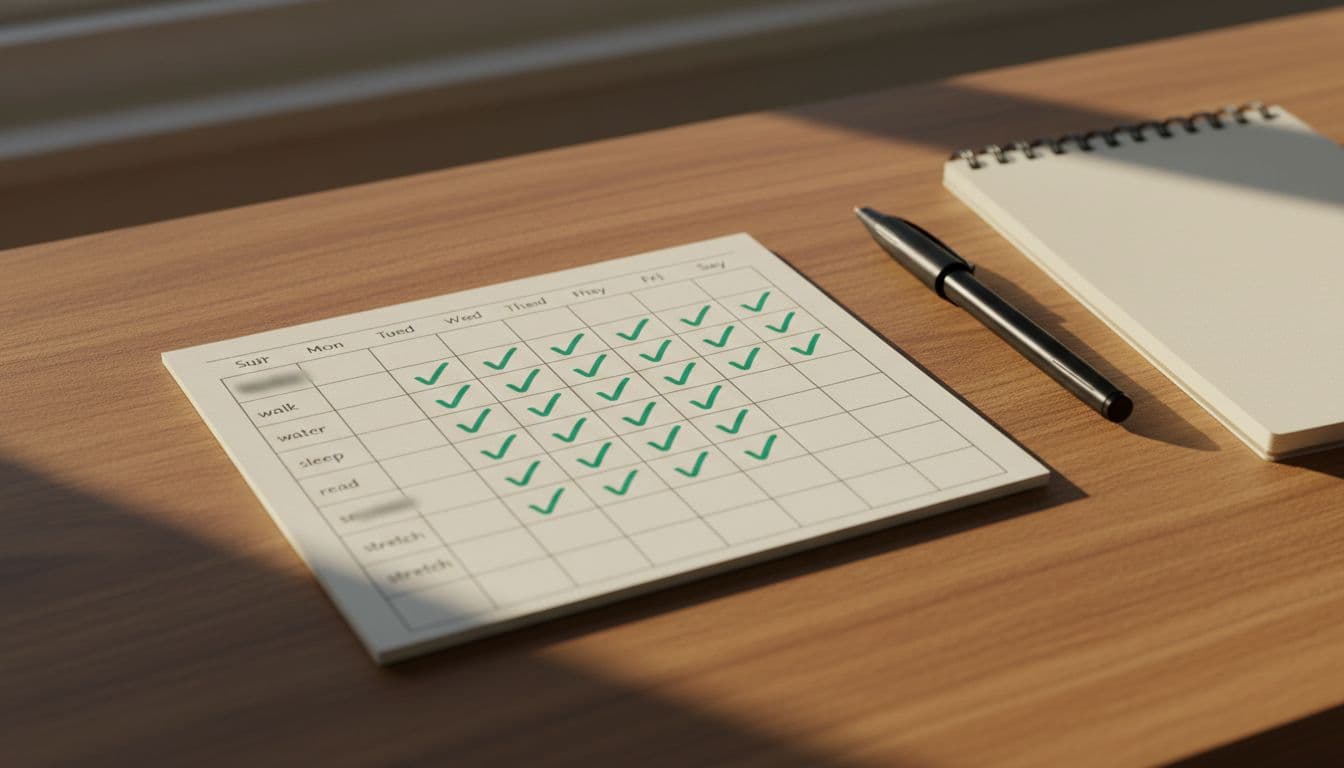
Simple tracking helps you notice patterns. Maybe your walks happen more when shoes are by the door. Maybe bedtime slips when screens stay on late. You’re not chasing perfection. You’re learning what helps.
Expect setbacks and plan your reset ahead of time
Travel, stress, illness, and bad sleep are normal. They don’t mean your routine failed.
Plan a reset before you need it. On hard days, do the smallest version of the routine. Walk for five minutes. Drink water. Go back to one anchor habit, like a steady bedtime or a short walk after meals.
Missing a day is just a missed day. The problem starts when one missed day turns into “I blew it.”
Use support if you do better with accountability
Some people stay consistent on their own. Others do better with support, and that’s fine.
A walking buddy can help. So can a family member, class, coach, or health professional. If you’ve struggled to stay on track alone, support can make healthy habits feel lighter and more doable.
A routine doesn’t have to be solo to count.
A healthy routine sticks when it’s small, realistic, and repeatable. Start with one or two habits this week, not a full life overhaul. Over time, those small actions build better energy, better health, and more confidence. The best routine isn’t the hardest one, it’s the one that still works on an ordinary day.


