



The most common habit mistake is easy to spot. A burst of motivation hits, and suddenly you want to fix your sleep, meals, workouts, stress, and screen time all in one week.
It feels productive at first. Then real life shows up. Work runs late, your energy drops, and the whole plan starts to crack. That’s why big overhauls often backfire for health, fitness, and well-being. They ask too much, too soon.
A better approach is small habits. They’re easier to start, easier to repeat, and more likely to stick when life gets messy. Recent research backs this up. Instead of chasing a total reset, focus on one small change, shape your environment to support it, and build consistency before adding more.
Start with one habit so your brain can actually keep up
Trying to build five new habits at once sounds ambitious. In practice, it creates too many decisions. You have to remember what to do, when to do it, and how much effort each habit needs. That mental load adds up fast.
As a result, even good goals can start to feel heavy. You skip one workout, stay up late one night, and suddenly the whole plan feels broken. Burnout often starts there, not because the goal was bad, but because the load was too high.
One habit keeps things clear. It gives your brain one target, one cue, and one repeat action. That matters more than most people think, because habits grow through repetition, not excitement.
If you want better health, pick one lane first. Maybe it’s sleep. Maybe it’s walking. Maybe it’s drinking more water. Each of those can improve how the rest of your day feels.
Pick the habit that gives you the biggest daily win
When you choose your first habit, don’t ask what sounds impressive. Ask what makes the rest of the day easier.
For one person, going to bed 15 minutes earlier can lower late-night snacking and make morning workouts more likely. For someone else, a five-minute walk after lunch may lift mood and reduce that sluggish afternoon crash. Another person may get the biggest win from drinking a glass of water before coffee.
That’s the habit to start with, the one that creates a ripple effect.
A simple test helps. Think, “If I did one healthy thing every day, what would help me most?” The answer is often small and obvious. That’s a good sign.

Big wins don’t always look dramatic. Sometimes they look like a full water bottle on the counter, shoes by the door, or a bedtime alarm that goes off at the same hour each night.
Choose the habit that helps your day run better, not the one that looks best on paper.
Make the first step so easy you can do it on a hard day
This is where most habit plans fall apart. People choose the right habit, but the first version is too big.
If you want to exercise, your habit doesn’t need to be a full workout. It can be one push-up. If you want to stretch, start with two minutes. If you want to eat better, begin with one piece of fruit. If you want to hydrate more, fill one bottle each morning.
The point is not to “hack” yourself. The point is to make the habit small enough that you can still do it on a low-energy day.

That’s how habits become real. Not when you feel inspired, but when you show up even when you don’t.
On tough days, the goal is not a perfect habit. The goal is keeping the pattern alive.
A tiny action counts because it protects the routine. Once you start, you may do more. Still, that’s a bonus. The win is showing up.
Build habits that fit your real life, not your ideal life
A lot of habit advice quietly assumes you have plenty of time, energy, and control over your day. Most people don’t. Schedules change. Kids wake up early. Meetings run long. Stress hits without warning.
So your habit plan has to work in real conditions, not fantasy ones.
This shift matters because the best habit is not the most ambitious one. It’s the one you can repeat when life feels ordinary, busy, or slightly off.
Tie a new habit to something you already do
One of the easiest ways to remember a new habit is to attach it to an old one. This is often called habit stacking, but the idea is simple. You use an existing routine as a cue.
After you brush your teeth, do two minutes of stretching. With breakfast, take your vitamins. While the coffee brews, do a few bodyweight squats. After lunch, walk for five minutes.
That old routine acts like an anchor. Because you already do it, you don’t have to rely on memory alone. The brain likes patterns, and linked actions take less effort to repeat.
This also cuts down on the “I forgot” problem. Instead of asking yourself to remember a brand-new behavior in an empty space, you place it next to something solid.
Keep the pairing simple. If the stack feels clumsy, it won’t last. The best matches feel natural, almost like one action leads into the next.
Use your environment to make good choices easier
Willpower is unreliable, especially when you’re tired or stressed. Your environment, on the other hand, works quietly all day.
That’s why systems matter more than good intentions. When healthy choices are easy to see and easy to do, you make them more often without a big inner debate.
Put workout clothes where you’ll notice them. Keep fruit at eye level. Place a filled water bottle on your desk. Charge your phone across the room instead of next to the bed. Set out a yoga mat the night before.
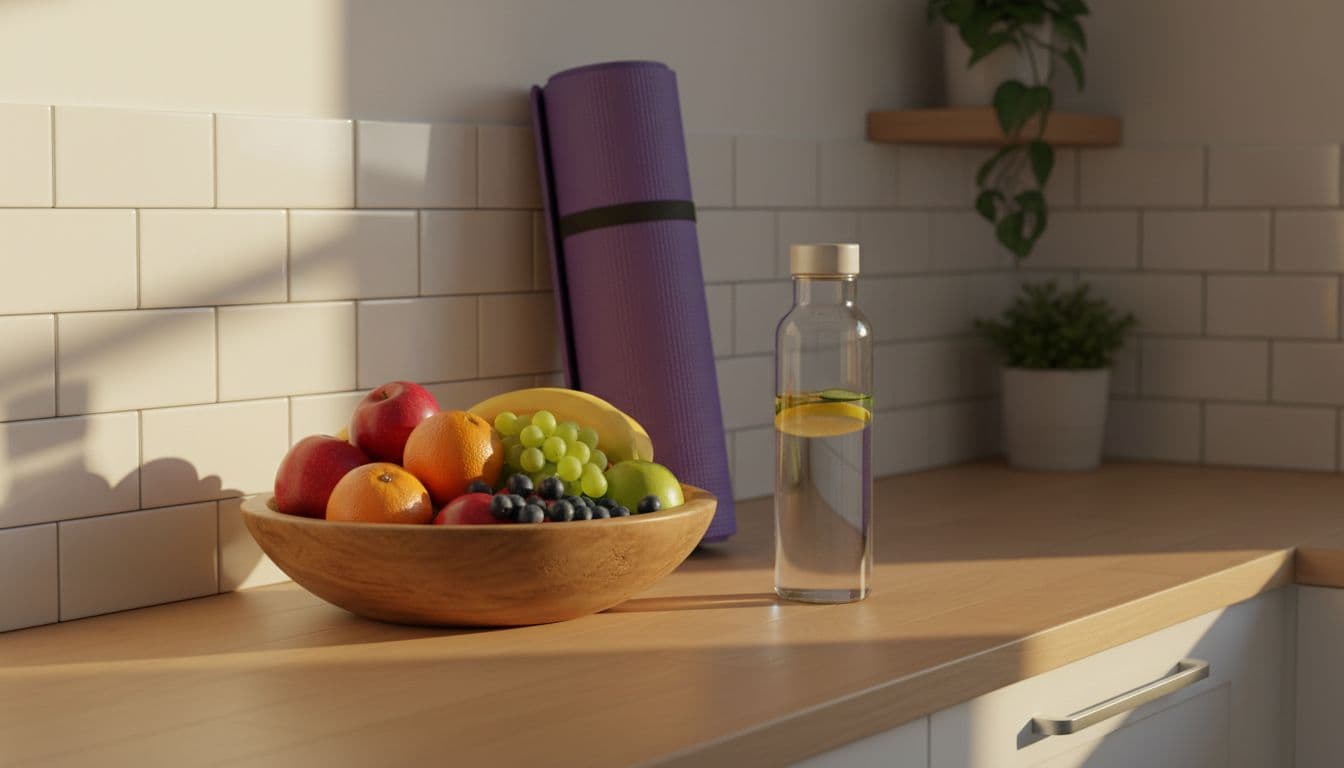
These changes may seem small, but they lower friction. And when attention is low, lower friction matters a lot.
Think of your space like a trail. If the path to the good habit is clear, you’ll follow it more often. If the bad habit sits in the center of the room, autopilot usually wins.
Make bad habits harder so you stop running on autopilot
Building better habits isn’t only about adding good actions. It also helps to slow down the habits that work against you.
That might mean overeating at night, doomscrolling when you’re bored, skipping workouts because the setup feels annoying, or staying up too late because your phone keeps pulling you in.
You don’t need a dramatic fix. Often, a small barrier is enough to break the automatic loop.
Add small barriers between you and the habit you want less of
Bad habits usually thrive on ease. They’re right there, ready to go, and familiar.
So make them a little less convenient. Log out of social apps. Put the TV remote in a drawer. Keep junk food out of sight, or better yet, don’t bring it home often. Set a short app delay on your phone. Leave your charger outside the bedroom.
None of this is extreme. It simply adds a pause.
That pause matters because autopilot needs speed. When a habit becomes even slightly slower, you create room for a different choice. You notice what you’re doing. You interrupt the loop. Then you get a second to decide.
For many people, that’s enough to change the outcome.
Notice the feeling that triggers the habit
A lot of habits don’t start with the action. They start with a feeling.
You scroll because you’re bored. You snack because you’re stressed. You skip the walk because you’re tired and want comfort. If you only focus on the action, you miss the real trigger.
Try this instead. When the urge shows up, pause for five seconds and name the feeling. “I’m stressed.” “I’m restless.” “I’m tired.” That simple label creates a little distance.
From there, choose a small replacement. Drink water. Take a short walk. Stand outside for a minute. Breathe slowly a few times. Stretch your shoulders.
The replacement doesn’t need to solve everything. It just needs to meet the moment better than the old habit did.
Track progress in a way that keeps you going
Habits stick through feedback. You do the action, notice what helped, adjust, and repeat. That loop works better than waiting to “feel disciplined.”
It also helps to be patient. New reviews in 2025 found that health habits often take much longer than 21 days to feel automatic. A common range is around 59 to 66 days, though some habits take far less time and others take much longer.
So if your habit still feels awkward after three weeks, nothing is wrong. You’re still in the build phase.
The 21-day rule makes people quit too early. Consistency matters more than speed.
Measure consistency, not intensity
Most people track habits the wrong way. They judge the size of the effort instead of whether they showed up.
That mindset creates an all-or-nothing trap. A short walk seems pointless next to a hard workout. One healthy meal feels too small to count. Then motivation drops.
Track the repeat, not the performance. Use a calendar check mark. Mark a habit app. Write one line in a notebook. Stick a note on the fridge. The method doesn’t matter much. The signal does.
You want proof that you kept the promise.
Small repeated actions beat occasional bursts of effort. They also build trust in yourself, which is often the missing piece in long-term change.
Grow the habit only after it feels normal
Once a habit feels steady, then you can expand it.
A five-minute walk can become 10. One piece of fruit each afternoon can turn into a simple plan for snacks. A 15-minute earlier bedtime can become a stronger evening routine with dim lights and less screen time.
The key is timing. Growth works best when the base already feels normal. If you scale too early, the habit starts to feel heavy again.
Think of it like adding weight in the gym. First, you learn the movement. Then you add load. Habits work the same way.
Slow growth may look boring, but it lasts. And lasting change always beats a quick sprint that fades out.
Better habits don’t come from trying to change everything at once. They come from choosing less at the start, then repeating it long enough for it to stick. Pick one habit, make it tiny, fit it into your real life, reduce friction for the habits that pull you off track, and track whether you showed up. Start today with one small action you can keep, because small is often what finally works.


